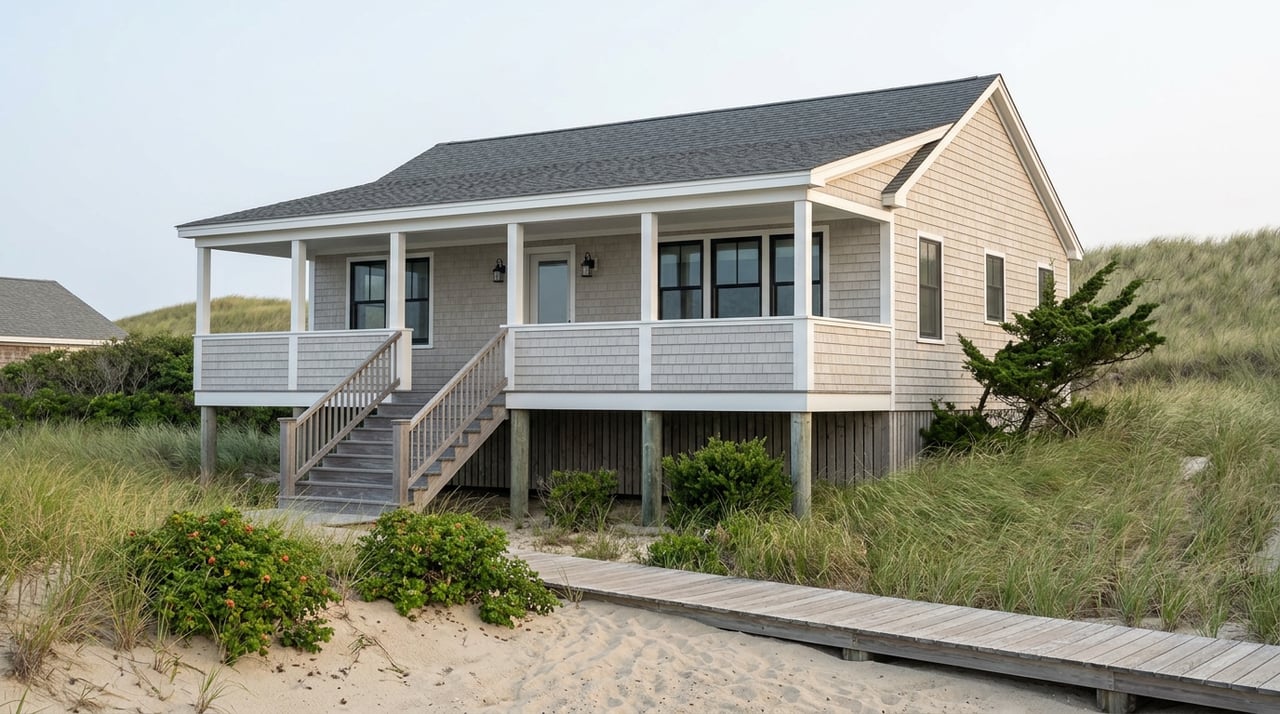
Buyers touring Brigantine this fall keep hitting the same wall. They find an older cottage a few blocks off the beach, priced well below the newer elevated homes nearby, and the math looks simple: buy low, put some money into a renovation, end up with a beach house for less than everyone else paid. Then they start pricing the renovation and the number stops making sense.
The reason has nothing to do with contractors running up a bill. It has to do with a state rule that finished phasing in this year and quietly changes what "renovate" means for a lot of Brigantine's older housing stock.
The rule that just finished phasing in
On January 20, 2026, the New Jersey Department of Environmental Protection adopted its Resilient Environments and Landscapes rule, known as REAL. The headline change for anyone building or renovating in a tidal flood area is a new baseline called the Climate-Adjusted Flood Elevation, or CAFE: four feet above FEMA's Base Flood Elevation, replacing the older standard that tracked FEMA's number directly.
NJDEP gave the market a grace period. Projects that got a permit application deemed administratively and technically complete by July 20, 2026 could still be reviewed under the pre-REAL rules. That window closed this past summer. Every new construction or substantial improvement project in Brigantine's flood hazard areas is now measured against the four-foot standard, not the old one.
That is not a distant regulatory story. It is the rule in effect on any renovation permit filed in Brigantine today.
Fifty percent is the number that actually matters
Here is where it gets specific to older homes. Brigantine's own flood damage prevention ordinance follows the National Flood Insurance Program's substantial improvement standard: if the cost of a renovation, addition, or repair equals or exceeds 50% of the building's market value, the project has to meet the same construction requirements as new construction. That means the CAFE standard applies in full.
This is the trigger buyers miss when they're comparing sticker prices. A home doesn't have to be torn down to get pulled into the new elevation requirement. It just has to get a renovation big enough, relative to its value, to cross that 50% line. On a modest, dated Brigantine bungalow, a genuine kitchen-to-roof renovation crosses that line easily. Once it does, the project isn't a renovation anymore in the eyes of the Floodplain Administrator. It's new construction, held to the four-foot-above-BFE standard, on a barrier island where a lot of the existing housing sits well below that.
Why the insurance number tells the same story twice
The elevation question doesn't stop at the construction permit. It follows the house into its insurance bill for as long as anyone owns it.
Under FEMA's Risk Rating 2.0 system, elevation relative to Base Flood Elevation is now the single largest factor in what a flood policy costs, more than flood zone alone. The gap this creates between two otherwise identical homes is not small. A home sitting three feet above BFE and a neighboring home at BFE, both in the same Zone AE, can see annual premiums roughly $1,200 versus $3,500. Same street, same flood zone, same size house. The difference is entirely in how high the structure sits.
| Elevation relative to BFE | Illustrative annual NFIP premium |
|---|---|
| 3 feet above BFE | around $1,200 |
| At BFE | around $3,500 |
That spread is why the "deal" listing deserves a second look before an offer goes in. An unelevated older home doesn't just carry renovation risk under the new rule. It carries a permanent, ongoing insurance cost that a comparably sized, already-elevated home nearby does not.
What this means for the house you're actually looking at
Put the two mechanisms together and the picture for an older, unelevated Brigantine property looks different than the asking price suggests. If the renovation you have in mind is modest and stays under the 50% threshold, the CAFE standard may not apply to you at all. If it's the kind of gut renovation that makes an older house feel new, you're likely triggering full elevation compliance under a rule that has been the operative standard since this past July. And regardless of whether you renovate, the insurance bill on an unelevated structure keeps running at the higher end of that Risk Rating 2.0 spread for as long as it stays unelevated.
None of that makes the older home a bad buy. It makes it a different buy than the price tag implies, and the difference is exactly the kind of thing worth pricing out before you're under contract rather than after.
What Brigantine already has in place to help
Brigantine has been dealing with flood risk as a barrier island community for a long time, and there's real local infrastructure built around it. The city has participated in the National Flood Insurance Program since June 18, 1971, and it holds a Community Rating System class of 5 or better, which means residents already receive a discount on NFIP premiums simply because the city has invested in flood risk reduction over the years.
The Construction Office, run by Construction Official Rich Stevens, will provide a free flood zone determination for any property in the city, including whether a specific address sits in a Coastal A Zone or has a documented flooding history. That's a phone call worth making before writing an offer, not after.
Through its partnership with the NJ Coastal Coalition, the city also connects residents with three local and regional insurance agencies for help understanding a policy or comparing elevation-based pricing: Heist Insurance, Brown & Brown Insurance, and McMahon Insurance. Any of them can run the premium math on a specific property at its current elevation versus what it would look like if raised.
Before you write an offer on an older Brigantine home
- Ask the seller or listing agent whether an elevation certificate exists for the property, and if not, budget $200 to $500 for a licensed New Jersey surveyor to produce one.
- Call the Construction Office for a flood zone determination on the specific address, including whether it sits in a Coastal A Zone.
- Price your actual renovation scope against 50% of the home's market value before assuming it stays outside the substantial improvement trigger.
- Get a premium quote at the home's current elevation, and a second quote modeled at four feet above BFE, from one of the city's partner agencies.
- Factor New Jersey's mandatory flood disclosure, in effect since March 20, 2024, into your timeline. Sellers are required to disclose FEMA Special Flood Hazard Area status and known flood history before you're contractually obligated, so this information should already be in front of you early in the process.
A couple of questions worth answering directly
Does the REAL rule affect a home I'm not planning to renovate at all? Not directly. The CAFE standard applies to new construction and to renovations that cross the 50% substantial improvement threshold. A home you buy and leave as-is isn't subject to a new construction requirement just because the rule exists.
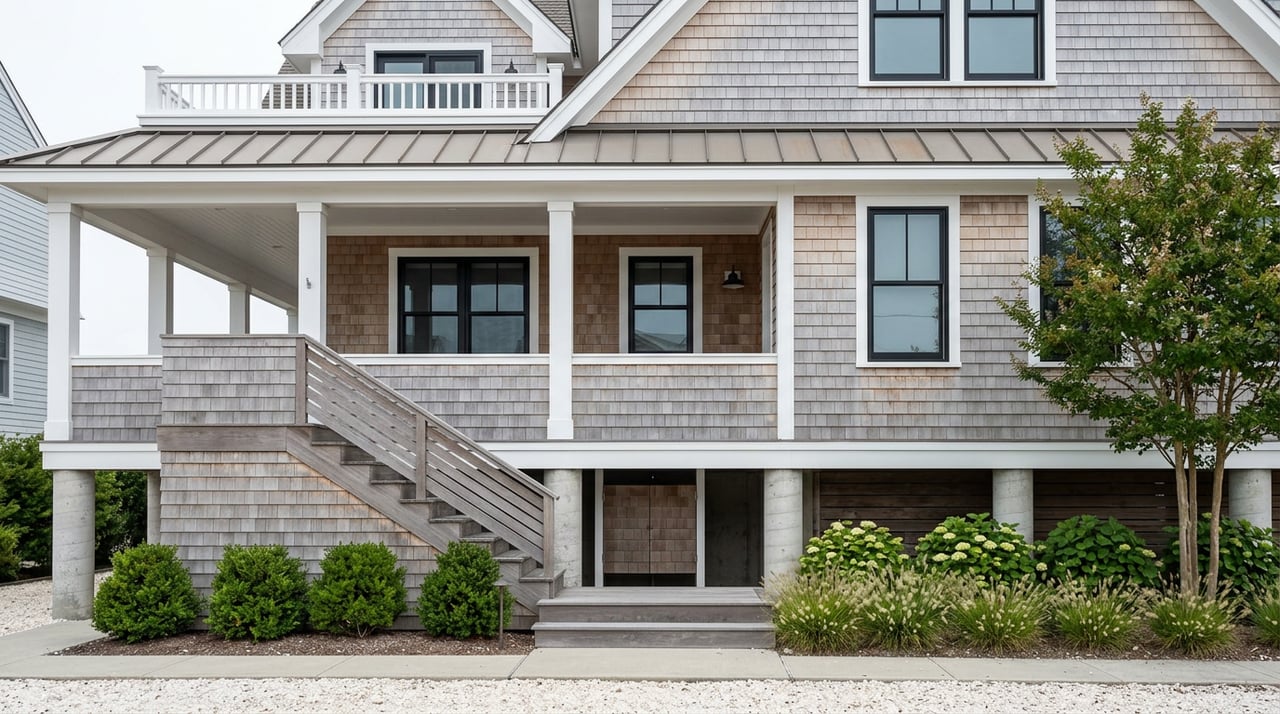
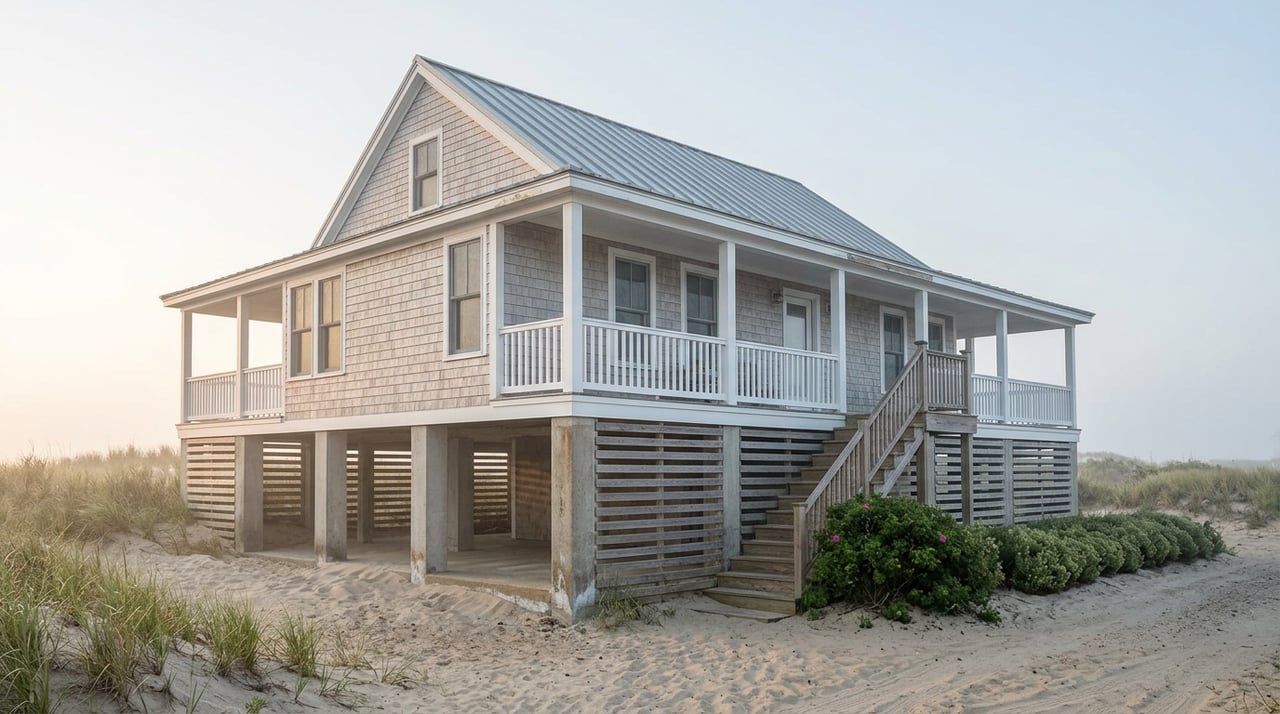
What if the home I'm looking at is already elevated above BFE? Then a lot of this doesn't apply to you the same way. An already-elevated home is generally not pulled into the CAFE requirement by ordinary renovation work, and it's already sitting on the favorable side of the Risk Rating 2.0 premium gap. That's part of why newer elevated construction on the island tends to command a different price than it did even a few years ago.
Brigantine's older housing stock still has real value, both as homes and as investments, but the number on the listing sheet only tells you what the house costs today. What it costs to renovate, insure, and eventually resell now runs through a rule that finished phasing in this year. If you're comparing two Brigantine properties and the price gap seems too good to be true, it's worth running the elevation math before it's the only math left to do.
If you're weighing an older Brigantine property against a newer elevated build, or you just want a second set of eyes on what a specific address's flood status means for your plans, reach out to Alexander Huffard. A conversation before the offer is worth a lot more than one after the inspection.